Friday, March 25, 2011

Varieties of English

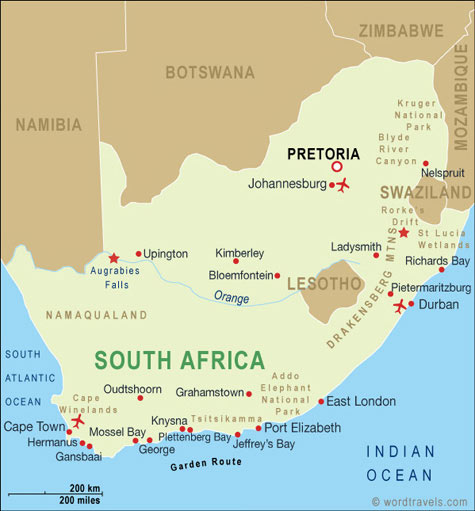
English is the third most natively spoken language in the world, but it is also the language that has been most widely dispersed around the world. In other parts of the world than the Angelo-American core area, the language is spoken in many different ways. Each country who had adopted English as a second language has a different dialect. In this blog post I will write about the language varieties in Singapore, Hong Kong and South Africa. Even though both Singapore and South Africa is listed as an Angelo-American core area, I don’t consider them as such. That is why I have chosen to write about them, as well.  
In Singapore there are two main forms of English spoken. The forms are “standard Singapore English” and “Singapore colloquial English” or “Singlish”. The first form is mostly spoken by reasonably educated people. The grammar of this form of English is very similar to the British English. Singlish, on the other hand is not so commonly used. It is often regarded with low prestige in Singapore.
Singapore is a city that contains many different ethnic groups and cultures. They all speak different languages as their first language and because of this the English fluency level varies a lot among the residents in Singapore. It also means that even within Singapore there is a wide range of different English accents.
South Africa also has different forms of English. They divide them into three groups, the cultivated, the general and the broad. These forms of English are linked with the different classes in the society. The higher class speaks the cultivated form of English, the middle class speak the general form and the broad form is spoken by the working class.  In South Africa the pronunciation of English is similar to the one in southern England. They speak in a non-rhotic way, which means that they don’t speak with hard consonants.
In Hong Kong there are two types of English spoken. First there are the varieties of English accents spoken in the territory. They use mostly British spellings, but some vocabularies have origin in India and Malay. The second type of English is also called Cantonese English. It is not only spoken in Hong Kong, but everywhere where there are people whose first language is Cantonese. You can say that it refers to the accent and characteristics of English spoken by native Hongkongers and other Cantonese speakers.

Sources:

Friday, March 18, 2011

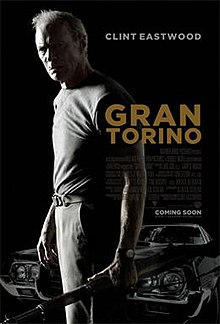
Gran Torino

Today we watched the movie Gran Torino in class. It was a very good movie that really moved me. The movie is directed by Clint Eastwood, who also played the lead. I think he did a spectacular job in playing the grumpy old Walter Kowalski. The themes in the movie were ethnic relations, immigration, economic changes in America, life in urban America, individual violence and conflict resolution. I think the movie managed to give all these themes the right attention.

The movie is about an old man living in a neighborhood where many immigrants have moved recently. His wife had just died when a Hmong family moved in next door. In the beginning he just think they are annoying swamp rats, but after the son in the family Thao tries to steel his car he eventually gets to know the family. He tries to help Thao out in dealing with the neighborhood gangs, and in return Thao and his family kind of bring him out of his depression. He was fighting in the Korean War and was still carrying a lot of pain with him. In helping Thao and his family, he finds a little peace and happiness again.

What challenges do immigrants face in starting new lives for themselves? This is discussion question we were asked to write something about. I think that the first challenge immigrants’ face in a new country is the cultural difference. Each culture has different traditions and customs, and it can be difficult to assimilate to another culture. It is also important not to lose your own culture in the process. Immigrants can also have a problem with people not accepting them. They don’t understand their culture and develop prejudices against them. This often results in racism. The language can also be difficult for an immigrant new to a country. If you don’t know the language everything else becomes much more difficult. Because of that it is very important that immigrants learn the language as fast as possible.

The movie Gran Torino gives a lot of attention to cultural differences. When Walt joins the Hmong family for a barbecue he learns about some of them. For example you can’t pat a Hmong person on the head because they think that is where the soul resides. Hmong people also find it rude when you look them directly in the eyes and they care a lot about their family’s honor. Walt thinks this is crazy in the beginning of the movie, but he learns to respect it. Also when Walt chases the gang away from the Hmong family’s house, people start showing up at his door with food, flowers and gifts. This is to show their gratitude for that he protects the neighborhood.

All in all I really liked the movie and the message it was sending. It was very enlightening and I learned a lot about the Hmong culture and the difficulties immigrants face in a new country.


Thursday, March 17, 2011

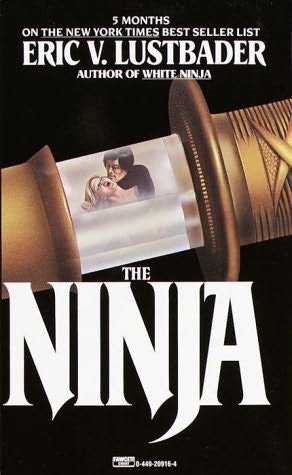
The Ninja

I have read "The Ninja" by Eric van Lustbader. I read it for an English assignment where we could choose which book to read ourselves. I will now write a little bit about the book and my opinions of it. I tried not to say too much about what happens, but this blog post may contain some spoilers.

"The Ninja" is the first book in the series of Nicholas Linnear. He is the main character in all the books. In "The Ninja" the past is an important factor in what happens in the present. The book is divided into four parts, where each part contains chapters that is of the present and chapters that is of the past. It is a brilliant set up for this book because then as you learn more about the past you understand more and more about the present.

Nicholas Linnear is half English and half Chinese, but his family moved to Japan when he was little. In Japan Nicholas developed an interest for bujutsu, their form of martial arts. He started training in the art of bujutsu and became quite good at it. His cousin Saigõ also practices bujutsu and they become rivals pretty early. Through Saigõ, Nicholas met Yukio and he fell in love with her immediately. Yukio is a complicated girl with many problems, but Nicholas loves her anyway. To not spoil the book completely I will not tell you all about what happened in the past, but certain events lead up to Nicholas father dying and his mother committing seppuku, which is a ritualistic suicide. All of this is part of Nicholas past which eventually leads up to what happens in the present.

In the present Nicholas lives in America. He has a girlfriend called Justin and is living peacefully. Nicholas gets dragged back into his past when the police find a dead man who showed signs of being killed by a ninja. The ninjas were said to be extinct, but apparently they were not. In the old Japan, the society's military force where the samurai. They where people of high class who had trained in the art of bujutsu. The samurai had a strict code as to what was right and wrong and there were certain things they where honor bound not to do. When they wanted something questionable done, they hired ninjas. Ninjas where from the lower parts of the community and they had no rules. The ninjas where trained assassins, and now there was a ninja running around New York. Nicholas, who is an expert on the topic of ninjas, tries to help the police by giving them information about them. Suddenly Nicholas friends begin dying, and Justin gets an old Japanese warning sign. He then realizes that this is personal, and that he knows the ninja.

I think that "The Ninja" was a good book. It contained a lot of action, drama, romance and Japanese history. The main themes are revenge, family and loyalty to traditions and your country. I would definitely recommend "The Ninja" to those who enjoy reading about Japan and martial arts, and also to those who just like action.


Friday, February 4, 2011

Megacities

A megacity is a city with more than 10 million innhabitans. According to the book "worldwide", there were 10 megacities in 2006. The top three populations were Tokyo (33.4 million), New York (24.1 million) and Mexico City (21.7 million). Living in a country like Norway with approximately 5 million innhabitans, we can't begin to imagine how it would be to live in a city with 6-7 times as many people as we have in our country. According to wikipedia, the density of Tokyo is 5796 innhabitans per km² , while in Norway it's 12,65. That's a crazy differense, and makes us wonder how this affects the enviroment around us.

One of the graphs shows the growth of the urban population from 1800 to 2030. It contains five different pie diagrams that each showes how many procent of the words population live in urban areas. The first diagram shows that in 1800, only 2 % of the worlds population lived in the urban areas. From 1800 to 1950, which is the second diagram, there was a huge growth in urban population. Now there where 30 % who where living in urban areas. In 2000 the number increased again, and this time to 47 %. The last two diagrams are estimated numbers. It is estimated that in 2015, 52 % will live in urban areas, and in 2030, about 60 % of the worlds poulation will live in the urban areas. This statistic is taken from the UB-habitat, BBC.

The other graph shows us the relation between people living in cities and regions in five of the continents of the world. The green part of the column shows the people living in rural areas, while the red shows the amount of people living in urban areas. The whole column shows the total population. The second column on each continent is how the scientists think the population will look like in 2015. The source used is UB- habitat, BBC.


Sources:
http://no.wikipedia.org/wiki/Norge
http://no.wikipedia.org/wiki/Tokyo
Written by: Nooshin, Eline and Marie.

Friday, January 28, 2011

Racism problems in South Africa

South Africa is a country which consists of around 49,991,300 people. These people can be divided into four ethnic groups, the white, the black, the colored and the Asian. South Africa also has eleven official languages. With this many different people there are bound to be conflicts. In this blog post I will study racism problems in South Africa and how Africa's background affects this.
South Africa was ruled by apartheid between 1948 and 1994. Apartheid was a system of legal racial segregation and was enforced by the National Party government of South Africa. In the time of apartheid the white people maintained their minority rule. The inhabitants of South Africa where divided into four groups, where the white people where the only ones with the right to vote. The other three groups, who where the majority of the population where discriminated against in almost every way possible. There where restrictions as to where they were allowed to work, shop, live and even where they were allowed to sit and go to the bathroom. Racial segregation in South Africa had been known since colonial times, but it was first in 1998 it was legalized. Many people fought against apartheid, and among them where Nelson Mandela.
Nelson Mandela was born in South Africa in 1918 and became South Africa’s first black president in 1994. He was also the first president who had been freely selected by all citizens of the country, and he won by a landslide. For a long time Nelson Mandela had been an activist in fighting against apartheid, and for this he was sent to prison. He spent 27 years of his life on Robben Island   which was a prison for political prisoners. Mandela was released in 1990 and immediately began working for a multiethnic democracy in South Africa. He gained the Nobel Prize for this work in 1993. In 1994 Nelson Mandela became president and apartheid was at an end. In his homeland South Africa people called him Madiba, which is a name of honor used on older members of his tribe. Nelson Mandela had become a symbol of peace and equality both nationally and internationally.
In class we saw the movie Invictus, which is a true story. This movie was about how Nelson Mandela, after reaching presidency, tried to rid South Africa of racism. Not all white people where happy with a black president and some of the black people thought that now they would be the ones on top. Nelson Mandela tried to peacefully change people’s opinions about each other. He wanted to make people realize that even though they came in different colors they were all worth the same. In the movie Mandela’s opinions become clear when he supports a rugby team that used to be a front for racism. He tries to unite South Africa in support of their country’s rugby team. At first neither the white people nor the black people like this, but in the end when the team win’s it looks like Mandela is one step closer to his goal.
Today the different ethnic groups are still affected by the apartheid politics. This is very visible when we look at South Africa’s economics. The white people still control most of the country’s resources, while mostly black people live close to poverty. You can also find traces of apartheid politics in crime. Close to 2000 white farmers have been killed by black farmers since Mandela took over in 1994.

Sources:
Haugum, Eva with others, Worldwide
The movie Invictus, 2009

Thursday, January 20, 2011

9|11

September 11th 2001 is a day the world will remember forever. It was on this day four planes where hijacked and used in a terror attack against the United States of America. Two planes crashed into the World Trade center, one flew into Pentagon and the fourth went down on a field in Pennsylvania. The fourth plane was heading in the direction of Washington D.C so it is believed that the original target was the white house. All passengers in all of the flights died. This terror attack was orchestrated by Al-Qaida and lead to some serious consequences.

Today we have seen a movie about 9/11. This movie was different than any other movie I have ever seen on this particular topic. The movie was filmed by two brothers from France, who were working on a documentary about a rookie firefighter.  They had been following the firefighters for a while and when September 11th came, they had no idea where it would lead them. What made this movie so different from everything I have ever seen about 9/11 is that it was filmed from the midst of the chaos. The firemen went to the scene as soon as the first plane hit. They tried to get control over the situation and when the second plane hit they had already sent firefighters up the stairs to evacuate the people. One of the two brothers who were filming the documentary was inside the lobby together with the fire chiefs. He kept on filming everything that happened, so in the movie we get a peak at what was really going on in there. The firefighters established a base in the lobby, and with the power out their only means of communication where their walkie talkies. They couldn't evacuate people through the main entrance because people higher in the tower had started jumping, so they lead them out another entrance. Everyone who was still inside when the towers went down died. Some of the firefighters in the lobby and the one making the movie managed to get out alive.

The media’s role was incredibly important in the event of 9/11. The entire world was watching as the twin towers fell, and they were shocked by what they saw. I am sure that no one will ever forget the sight of the towers one by one collapsing to dust. When the first plane hit there was confusion, and by the time the second one hit it was clear that this was not an accident. For the USA this was unimaginable. They had never ever before been attacked in their own home, so to speak.

The terror attack on the United States of America was followed by serious consequences. The lives of nearly 3,000 people and 19 hijackers were lost. Out of the 2,752 people who died at the World Trade center 343 of them where firefighters. The USA responded to the attack by invading Afghanistan to get rid of the Taliban. The Taliban had harbored Al-Qaida terrorists. This War of Terror is still going on today, and it is affecting most of the world. 9/11 also came with a lot of economical consequences. Lower Manhattan was left with destruction of billions of dollars worth of office spaces. It also caused the global stock marked to drop sharply. The collapse of the twin towers also had an effect on the people’s health. A lot of toxic debris was released during the collapse, and this has caused several people to die of cancer years after the terror attack. It has also caused debilitating illnesses among the rescue and recovery workers.

The movie 9/11 made a real impression on me. I feel like it’s the first time I have really seen what happened that day. On September 11th 2001, I was only 8 years old. I can remember watching the twin towers come crashing down on the television, but I didn't really get what was going on. I think that I heard what was happening, but it just wasn't real to me. Even though I now feel that I know more about it, I still can't imagine what it must have been like to be there during this catastrophe.

The world will always remember 9/11.

Thursday, January 13, 2011

Narnia by C.S. Lewis

Before Christmas we watched the movie Narnia: The lion, the witch and the wardrobe. Narnia is a very good movie and it is based on a book by C.S. Lewis.

In the beginning of the movie we find ourselves in England during World War 1. This is where we meet the four children who are the main characters in the movie. The names of these children are Peter, Susan, Edmund and Lucy and they are siblings. Because of the war they are evacuated to the country where they live with a professor and his housekeeper. It is in this house they find the wardrobe that leads them to another world named Narnia.

The movie is mainly a movie about family, war and good vs. evil. In Narnia the children becomes the front figures of a great war between the creatures of Narnia and the white witch. Like I said I think Narnia is a very good movie

The author of Narnia C.S. Lewis was born in 1898 and died in 1963. He was an Irish-born British novelist, academic, medievalist, literary critic, essayist, lay theologian and Christian apologist. C.S. Lewis is probably most known for “the Chronicles of Narnia” which consists of seven books and as of yet three movies. The fact that the books about Narnia take place during World War 1 is not a coincidence. C.S. Lewis lived during World War 1 and in 1917 he left his studies and volunteered in the British army.

Not everybody knows of C.S. Lewis long friendship with, who I believe to be one of the greatest authors ever, J.R.R. Tolkien. Tolkien has written a lot of books, but he is most famous for his awesome trilogy “Lord of the Rings”. C.S. Lewis and Tolkien both taught at Oxford University and shared an interest for literature. Furthermore, Tolkien influenced Lewis to become a Christian and Lewis helped Tolkien expand his fictional writing.    

C.S Lewis and J.R.R. Tolkien also had some serious disagreements, especially concerning Lewis’ Narnia books. Tolkien thought that they held too many obvious Christian symbols and messages. He believed that it became too much for the reader. An example of a Christian message in Narnia: The lion, the witch and the wardrobe is Aslan sacrificing himself on the stone table. Aslan is a lion, and a lion is a commonly used symbol for Christ. With this in mind the scene where Aslan sacrifices himself is a symbol for Christ who sacrificed his life and was resurrected for a final battle against evil.